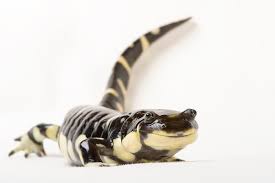
Tiger Salamander
Tiger Salamander (Ambystoma tigrinum) Care Sheet
Quick Facts
| Attribute | Details |
|---|---|
| Common Name | Tiger Salamander |
| Scientific Name | Ambystoma tigrinum |
| Origin | North America |
| Adult Size | 15–30 cm |
| Lifespan | 10–15 years in captivity |
| Activity | Nocturnal, terrestrial / semi-aquatic |
Behavior
-
Nocturnal and secretive; active mainly at night.
-
Terrestrial species but requires access to shallow water for soaking.
-
Generally docile; can be handled minimally but skin is sensitive.
-
Best observed rather than handled frequently.
Enclosure Requirements
-
Tank Size: Minimum 80 liters for a single adult; larger for multiple salamanders
-
Substrate: Moist soil, coconut fiber, or moss; keeps skin hydrated
-
Decor: Hides, rocks, logs, shallow water dish for soaking
-
Humidity: 60–80%
-
Temperature:
-
Day: 18–22°C
-
Night: 15–18°C
-
-
Lighting: Low light; low % UVB beneficial
-
Ventilation: Moderate airflow
Compatibility
-
Can be housed with conspecifics if the enclosure is large enough.
-
Avoid housing with fish or aggressive species that may injure the salamander.
Diet
-
Carnivorous; feeds on live or frozen-thawed prey:
-
Earthworms, crickets, small insects, and occasionally small feeder fish
-
-
Feed juveniles daily; adults 3–4× per week
-
Remove uneaten food to prevent contamination
-
Provide shallow water for hydration
Care Tips
-
Maintain moist substrate and high humidity to prevent skin drying.
-
Spot-clean enclosure regularly; remove waste and uneaten food.
-
Avoid overhandling; salamanders have delicate, permeable skin.
-
Monitor for signs of illness such as lethargy, skin lesions, or refusal to eat.
Breeding
-
Oviparous; females lay eggs in water.
-
Larvae are aquatic and require shallow water with hiding spots.
-
Juveniles metamorphose after several weeks to months, depending on temperature and water quality.
Visual Quick Guide
-
🏠 Enclosure: ≥80 L, moist substrate, hides, shallow water dish
-
🌡️ Temp: Day 18–22°C / Night 15–18°C
-
💧 Humidity: 60–80%
-
🍴 Diet: Carnivorous (worms, insects, small feeder prey)
-
🕒 Activity: Nocturnal, terrestrial/semi-aquatic
-
⚠️ Stress: Maintain humidity, provide hides, avoid excessive handling
Please note: We don't ship live animals. You can order online and choose click and collect, and we will hold it for you.
Tiger Salamander (Ambystoma tigrinum) Care Sheet
Quick Facts
| Attribute | Details |
|---|---|
| Common Name | Tiger Salamander |
| Scientific Name | Ambystoma tigrinum |
| Origin | North America |
| Adult Size | 15–30 cm |
| Lifespan | 10–15 years in captivity |
| Activity | Nocturnal, terrestrial / semi-aquatic |
Behavior
-
Nocturnal and secretive; active mainly at night.
-
Terrestrial species but requires access to shallow water for soaking.
-
Generally docile; can be handled minimally but skin is sensitive.
-
Best observed rather than handled frequently.
Enclosure Requirements
-
Tank Size: Minimum 80 liters for a single adult; larger for multiple salamanders
-
Substrate: Moist soil, coconut fiber, or moss; keeps skin hydrated
-
Decor: Hides, rocks, logs, shallow water dish for soaking
-
Humidity: 60–80%
-
Temperature:
-
Day: 18–22°C
-
Night: 15–18°C
-
-
Lighting: Low light; low % UVB beneficial
-
Ventilation: Moderate airflow
Compatibility
-
Can be housed with conspecifics if the enclosure is large enough.
-
Avoid housing with fish or aggressive species that may injure the salamander.
Diet
-
Carnivorous; feeds on live or frozen-thawed prey:
-
Earthworms, crickets, small insects, and occasionally small feeder fish
-
-
Feed juveniles daily; adults 3–4× per week
-
Remove uneaten food to prevent contamination
-
Provide shallow water for hydration
Care Tips
-
Maintain moist substrate and high humidity to prevent skin drying.
-
Spot-clean enclosure regularly; remove waste and uneaten food.
-
Avoid overhandling; salamanders have delicate, permeable skin.
-
Monitor for signs of illness such as lethargy, skin lesions, or refusal to eat.
Breeding
-
Oviparous; females lay eggs in water.
-
Larvae are aquatic and require shallow water with hiding spots.
-
Juveniles metamorphose after several weeks to months, depending on temperature and water quality.
Visual Quick Guide
-
🏠 Enclosure: ≥80 L, moist substrate, hides, shallow water dish
-
🌡️ Temp: Day 18–22°C / Night 15–18°C
-
💧 Humidity: 60–80%
-
🍴 Diet: Carnivorous (worms, insects, small feeder prey)
-
🕒 Activity: Nocturnal, terrestrial/semi-aquatic
-
⚠️ Stress: Maintain humidity, provide hides, avoid excessive handling
Please note: We don't ship live animals. You can order online and choose click and collect, and we will hold it for you.
Original: $203.54
-65%$203.54
$71.24Description
Tiger Salamander (Ambystoma tigrinum) Care Sheet
Quick Facts
| Attribute | Details |
|---|---|
| Common Name | Tiger Salamander |
| Scientific Name | Ambystoma tigrinum |
| Origin | North America |
| Adult Size | 15–30 cm |
| Lifespan | 10–15 years in captivity |
| Activity | Nocturnal, terrestrial / semi-aquatic |
Behavior
-
Nocturnal and secretive; active mainly at night.
-
Terrestrial species but requires access to shallow water for soaking.
-
Generally docile; can be handled minimally but skin is sensitive.
-
Best observed rather than handled frequently.
Enclosure Requirements
-
Tank Size: Minimum 80 liters for a single adult; larger for multiple salamanders
-
Substrate: Moist soil, coconut fiber, or moss; keeps skin hydrated
-
Decor: Hides, rocks, logs, shallow water dish for soaking
-
Humidity: 60–80%
-
Temperature:
-
Day: 18–22°C
-
Night: 15–18°C
-
-
Lighting: Low light; low % UVB beneficial
-
Ventilation: Moderate airflow
Compatibility
-
Can be housed with conspecifics if the enclosure is large enough.
-
Avoid housing with fish or aggressive species that may injure the salamander.
Diet
-
Carnivorous; feeds on live or frozen-thawed prey:
-
Earthworms, crickets, small insects, and occasionally small feeder fish
-
-
Feed juveniles daily; adults 3–4× per week
-
Remove uneaten food to prevent contamination
-
Provide shallow water for hydration
Care Tips
-
Maintain moist substrate and high humidity to prevent skin drying.
-
Spot-clean enclosure regularly; remove waste and uneaten food.
-
Avoid overhandling; salamanders have delicate, permeable skin.
-
Monitor for signs of illness such as lethargy, skin lesions, or refusal to eat.
Breeding
-
Oviparous; females lay eggs in water.
-
Larvae are aquatic and require shallow water with hiding spots.
-
Juveniles metamorphose after several weeks to months, depending on temperature and water quality.
Visual Quick Guide
-
🏠 Enclosure: ≥80 L, moist substrate, hides, shallow water dish
-
🌡️ Temp: Day 18–22°C / Night 15–18°C
-
💧 Humidity: 60–80%
-
🍴 Diet: Carnivorous (worms, insects, small feeder prey)
-
🕒 Activity: Nocturnal, terrestrial/semi-aquatic
-
⚠️ Stress: Maintain humidity, provide hides, avoid excessive handling
Please note: We don't ship live animals. You can order online and choose click and collect, and we will hold it for you.