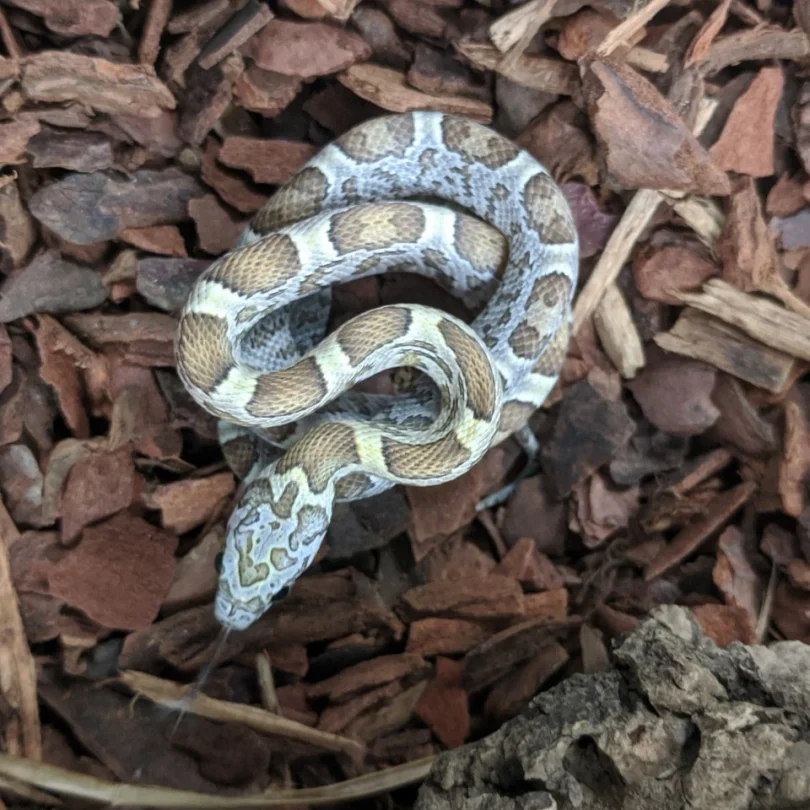
Honey Corn Snake
Honey Corn Snake (Pantherophis guttatus “Honey”) Care Sheet
Quick Facts
| Attribute | Details |
|---|---|
| Common Name | Honey Corn Snake |
| Scientific Name | Pantherophis guttatus “Honey” |
| Origin | North America (USA) – captive-bred morph |
| Adult Size | 120–180 cm |
| Lifespan | 15–20 years in captivity |
| Activity | Nocturnal / crepuscular, terrestrial |
Behavior
-
Docile and calm; excellent for beginners.
-
Terrestrial and secretive; enjoys hiding and exploring.
-
Active mainly at night and during dawn/dusk periods.
-
Adapts well to handling once acclimated.
Enclosure Requirements
-
Tank Size: Minimum 80–120 liters for a single adult
-
Substrate: Aspen shavings, coconut fiber, or reptile-safe soil
-
Decor: Hides at warm and cool ends, branches, rocks
-
Humidity: 40–60%
-
Temperature:
-
Basking / warm hide: 28–30°C
-
Ambient: 24–26°C
-
Night: 20–22°C
-
-
Lighting: Indirect light; UVB optional but beneficial
-
Ventilation: Moderate airflow
Compatibility
-
Can be housed with conspecifics if space and feeding are carefully managed; single housing recommended.
-
Avoid cohabiting with aggressive or much smaller species.
Diet
-
Carnivorous; feeds on appropriately sized rodents:
-
Frozen-thawed or pre-killed mice or small rats depending on size
-
-
Juveniles: feed every 5–7 days
-
Adults: feed every 10–14 days
-
Provide a shallow water dish for drinking
Care Tips
-
Provide hiding spots at both warm and cool ends.
-
Maintain a temperature gradient to allow thermoregulation.
-
Spot-clean regularly; remove feces and uneaten prey.
-
Handle gently and consistently to encourage docility.
-
Monitor for signs of illness, refusal to eat, or shedding problems.
Breeding
-
Oviparous; females lay 10–30 eggs per clutch.
-
Eggs incubate at 26–28°C with moderate humidity for 55–65 days.
-
Hatchlings are independent and require appropriately sized prey.
Visual Quick Guide
-
🏠 Enclosure: ≥80–120 L, hides, branches, substrate
-
🌡️ Temp: Basking 28–30°C / Ambient 24–26°C / Night 20–22°C
-
💧 Humidity: 40–60%
-
🍴 Diet: Carnivorous (appropriately sized rodents)
-
🕒 Activity: Nocturnal / crepuscular, terrestrial
-
⚠️ Stress: Provide hides, temperature gradient, and gentle handling
Please note: We don't ship live animals. You can order online and choose click and collect, and we will hold it for you.
Honey Corn Snake (Pantherophis guttatus “Honey”) Care Sheet
Quick Facts
| Attribute | Details |
|---|---|
| Common Name | Honey Corn Snake |
| Scientific Name | Pantherophis guttatus “Honey” |
| Origin | North America (USA) – captive-bred morph |
| Adult Size | 120–180 cm |
| Lifespan | 15–20 years in captivity |
| Activity | Nocturnal / crepuscular, terrestrial |
Behavior
-
Docile and calm; excellent for beginners.
-
Terrestrial and secretive; enjoys hiding and exploring.
-
Active mainly at night and during dawn/dusk periods.
-
Adapts well to handling once acclimated.
Enclosure Requirements
-
Tank Size: Minimum 80–120 liters for a single adult
-
Substrate: Aspen shavings, coconut fiber, or reptile-safe soil
-
Decor: Hides at warm and cool ends, branches, rocks
-
Humidity: 40–60%
-
Temperature:
-
Basking / warm hide: 28–30°C
-
Ambient: 24–26°C
-
Night: 20–22°C
-
-
Lighting: Indirect light; UVB optional but beneficial
-
Ventilation: Moderate airflow
Compatibility
-
Can be housed with conspecifics if space and feeding are carefully managed; single housing recommended.
-
Avoid cohabiting with aggressive or much smaller species.
Diet
-
Carnivorous; feeds on appropriately sized rodents:
-
Frozen-thawed or pre-killed mice or small rats depending on size
-
-
Juveniles: feed every 5–7 days
-
Adults: feed every 10–14 days
-
Provide a shallow water dish for drinking
Care Tips
-
Provide hiding spots at both warm and cool ends.
-
Maintain a temperature gradient to allow thermoregulation.
-
Spot-clean regularly; remove feces and uneaten prey.
-
Handle gently and consistently to encourage docility.
-
Monitor for signs of illness, refusal to eat, or shedding problems.
Breeding
-
Oviparous; females lay 10–30 eggs per clutch.
-
Eggs incubate at 26–28°C with moderate humidity for 55–65 days.
-
Hatchlings are independent and require appropriately sized prey.
Visual Quick Guide
-
🏠 Enclosure: ≥80–120 L, hides, branches, substrate
-
🌡️ Temp: Basking 28–30°C / Ambient 24–26°C / Night 20–22°C
-
💧 Humidity: 40–60%
-
🍴 Diet: Carnivorous (appropriately sized rodents)
-
🕒 Activity: Nocturnal / crepuscular, terrestrial
-
⚠️ Stress: Provide hides, temperature gradient, and gentle handling
Please note: We don't ship live animals. You can order online and choose click and collect, and we will hold it for you.
Original: $161.66
-65%$161.66
$56.58Description
Honey Corn Snake (Pantherophis guttatus “Honey”) Care Sheet
Quick Facts
| Attribute | Details |
|---|---|
| Common Name | Honey Corn Snake |
| Scientific Name | Pantherophis guttatus “Honey” |
| Origin | North America (USA) – captive-bred morph |
| Adult Size | 120–180 cm |
| Lifespan | 15–20 years in captivity |
| Activity | Nocturnal / crepuscular, terrestrial |
Behavior
-
Docile and calm; excellent for beginners.
-
Terrestrial and secretive; enjoys hiding and exploring.
-
Active mainly at night and during dawn/dusk periods.
-
Adapts well to handling once acclimated.
Enclosure Requirements
-
Tank Size: Minimum 80–120 liters for a single adult
-
Substrate: Aspen shavings, coconut fiber, or reptile-safe soil
-
Decor: Hides at warm and cool ends, branches, rocks
-
Humidity: 40–60%
-
Temperature:
-
Basking / warm hide: 28–30°C
-
Ambient: 24–26°C
-
Night: 20–22°C
-
-
Lighting: Indirect light; UVB optional but beneficial
-
Ventilation: Moderate airflow
Compatibility
-
Can be housed with conspecifics if space and feeding are carefully managed; single housing recommended.
-
Avoid cohabiting with aggressive or much smaller species.
Diet
-
Carnivorous; feeds on appropriately sized rodents:
-
Frozen-thawed or pre-killed mice or small rats depending on size
-
-
Juveniles: feed every 5–7 days
-
Adults: feed every 10–14 days
-
Provide a shallow water dish for drinking
Care Tips
-
Provide hiding spots at both warm and cool ends.
-
Maintain a temperature gradient to allow thermoregulation.
-
Spot-clean regularly; remove feces and uneaten prey.
-
Handle gently and consistently to encourage docility.
-
Monitor for signs of illness, refusal to eat, or shedding problems.
Breeding
-
Oviparous; females lay 10–30 eggs per clutch.
-
Eggs incubate at 26–28°C with moderate humidity for 55–65 days.
-
Hatchlings are independent and require appropriately sized prey.
Visual Quick Guide
-
🏠 Enclosure: ≥80–120 L, hides, branches, substrate
-
🌡️ Temp: Basking 28–30°C / Ambient 24–26°C / Night 20–22°C
-
💧 Humidity: 40–60%
-
🍴 Diet: Carnivorous (appropriately sized rodents)
-
🕒 Activity: Nocturnal / crepuscular, terrestrial
-
⚠️ Stress: Provide hides, temperature gradient, and gentle handling
Please note: We don't ship live animals. You can order online and choose click and collect, and we will hold it for you.