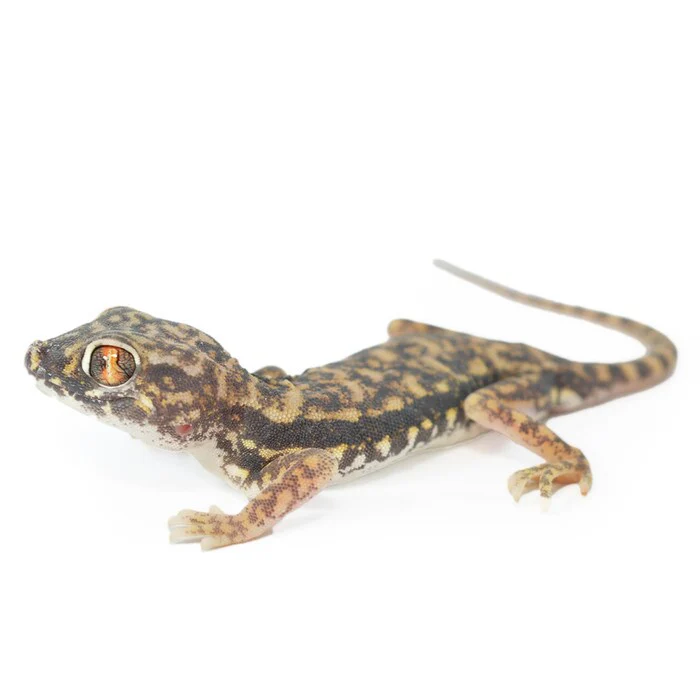
Dune Gecko
Dune Gecko (Stenodactylus petrii) Care Sheet
Quick Facts
| Attribute | Details |
|---|---|
| Common Name | Dune Gecko |
| Scientific Name | Stenodactylus petrii |
| Origin | Middle East / North Africa (desert regions) |
| Adult Size | 5–7 cm |
| Lifespan | 4–6 years in captivity |
| Activity | Nocturnal, terrestrial / sand-dwelling |
Behavior
-
Small, agile, and extremely fast-moving; primarily nocturnal.
-
Terrestrial; spends most of its time burrowing in loose sand.
-
Can be shy; minimal handling is recommended.
-
Excellent for desert terrariums; uses tail for balance and displays alert posture when hunting.
Enclosure Requirements
-
Tank Size: Minimum 30–40 liters for a pair
-
Substrate: Fine desert sand or sand-soil mix at least 5–10 cm deep for burrowing
-
Decor: Flat rocks, cork bark, shallow hides, and small branches for climbing
-
Humidity: 20–35%
-
Temperature:
-
Warm / basking spot: 30–33°C
-
Ambient: 24–28°C
-
Night: 20–22°C
-
-
Lighting: Low to moderate light; UVB optional but recommended for health
-
Ventilation: Good airflow; avoid high humidity
Compatibility
-
Can be housed in pairs or small groups with monitoring.
-
Avoid housing with larger, aggressive, or fast-moving species that may stress the geckos.
Diet
-
Carnivorous; feeds on small insects:
-
Pinhead crickets, fruit flies, small roaches, springtails
-
-
Juveniles: feed daily
-
Adults: feed every 2–3 days
-
Provide small shallow water dish or mist lightly; geckos get most hydration from prey
Care Tips
-
Provide deep substrate for natural burrowing and hiding.
-
Spot-clean daily; remove feces and uneaten prey.
-
Handle minimally; stress can negatively impact health.
-
Maintain warm temperature gradient for thermoregulation.
Breeding
-
Oviparous; females lay 1–2 eggs in loose sand or burrows.
-
Incubation: 50–65 days at 28–30°C.
-
Hatchlings are independent and require appropriately sized insects.
Visual Quick Guide
-
🏠 Enclosure: ≥30–40 L, deep sandy substrate, hides, flat rocks
-
🌡️ Temp: Warm spot 30–33°C / Ambient 24–28°C / Night 20–22°C
-
💧 Humidity: 20–35%
-
🍴 Diet: Carnivorous (small insects)
-
🕒 Activity: Nocturnal, terrestrial, burrower
-
⚠️ Stress: Provide deep substrate, hides, and minimal handling
Please note: We don't ship live animals. You can order online and choose click and collect, and we will hold it for you.
Dune Gecko (Stenodactylus petrii) Care Sheet
Quick Facts
| Attribute | Details |
|---|---|
| Common Name | Dune Gecko |
| Scientific Name | Stenodactylus petrii |
| Origin | Middle East / North Africa (desert regions) |
| Adult Size | 5–7 cm |
| Lifespan | 4–6 years in captivity |
| Activity | Nocturnal, terrestrial / sand-dwelling |
Behavior
-
Small, agile, and extremely fast-moving; primarily nocturnal.
-
Terrestrial; spends most of its time burrowing in loose sand.
-
Can be shy; minimal handling is recommended.
-
Excellent for desert terrariums; uses tail for balance and displays alert posture when hunting.
Enclosure Requirements
-
Tank Size: Minimum 30–40 liters for a pair
-
Substrate: Fine desert sand or sand-soil mix at least 5–10 cm deep for burrowing
-
Decor: Flat rocks, cork bark, shallow hides, and small branches for climbing
-
Humidity: 20–35%
-
Temperature:
-
Warm / basking spot: 30–33°C
-
Ambient: 24–28°C
-
Night: 20–22°C
-
-
Lighting: Low to moderate light; UVB optional but recommended for health
-
Ventilation: Good airflow; avoid high humidity
Compatibility
-
Can be housed in pairs or small groups with monitoring.
-
Avoid housing with larger, aggressive, or fast-moving species that may stress the geckos.
Diet
-
Carnivorous; feeds on small insects:
-
Pinhead crickets, fruit flies, small roaches, springtails
-
-
Juveniles: feed daily
-
Adults: feed every 2–3 days
-
Provide small shallow water dish or mist lightly; geckos get most hydration from prey
Care Tips
-
Provide deep substrate for natural burrowing and hiding.
-
Spot-clean daily; remove feces and uneaten prey.
-
Handle minimally; stress can negatively impact health.
-
Maintain warm temperature gradient for thermoregulation.
Breeding
-
Oviparous; females lay 1–2 eggs in loose sand or burrows.
-
Incubation: 50–65 days at 28–30°C.
-
Hatchlings are independent and require appropriately sized insects.
Visual Quick Guide
-
🏠 Enclosure: ≥30–40 L, deep sandy substrate, hides, flat rocks
-
🌡️ Temp: Warm spot 30–33°C / Ambient 24–28°C / Night 20–22°C
-
💧 Humidity: 20–35%
-
🍴 Diet: Carnivorous (small insects)
-
🕒 Activity: Nocturnal, terrestrial, burrower
-
⚠️ Stress: Provide deep substrate, hides, and minimal handling
Please note: We don't ship live animals. You can order online and choose click and collect, and we will hold it for you.
Original: $58.14
-65%$58.14
$20.35Description
Dune Gecko (Stenodactylus petrii) Care Sheet
Quick Facts
| Attribute | Details |
|---|---|
| Common Name | Dune Gecko |
| Scientific Name | Stenodactylus petrii |
| Origin | Middle East / North Africa (desert regions) |
| Adult Size | 5–7 cm |
| Lifespan | 4–6 years in captivity |
| Activity | Nocturnal, terrestrial / sand-dwelling |
Behavior
-
Small, agile, and extremely fast-moving; primarily nocturnal.
-
Terrestrial; spends most of its time burrowing in loose sand.
-
Can be shy; minimal handling is recommended.
-
Excellent for desert terrariums; uses tail for balance and displays alert posture when hunting.
Enclosure Requirements
-
Tank Size: Minimum 30–40 liters for a pair
-
Substrate: Fine desert sand or sand-soil mix at least 5–10 cm deep for burrowing
-
Decor: Flat rocks, cork bark, shallow hides, and small branches for climbing
-
Humidity: 20–35%
-
Temperature:
-
Warm / basking spot: 30–33°C
-
Ambient: 24–28°C
-
Night: 20–22°C
-
-
Lighting: Low to moderate light; UVB optional but recommended for health
-
Ventilation: Good airflow; avoid high humidity
Compatibility
-
Can be housed in pairs or small groups with monitoring.
-
Avoid housing with larger, aggressive, or fast-moving species that may stress the geckos.
Diet
-
Carnivorous; feeds on small insects:
-
Pinhead crickets, fruit flies, small roaches, springtails
-
-
Juveniles: feed daily
-
Adults: feed every 2–3 days
-
Provide small shallow water dish or mist lightly; geckos get most hydration from prey
Care Tips
-
Provide deep substrate for natural burrowing and hiding.
-
Spot-clean daily; remove feces and uneaten prey.
-
Handle minimally; stress can negatively impact health.
-
Maintain warm temperature gradient for thermoregulation.
Breeding
-
Oviparous; females lay 1–2 eggs in loose sand or burrows.
-
Incubation: 50–65 days at 28–30°C.
-
Hatchlings are independent and require appropriately sized insects.
Visual Quick Guide
-
🏠 Enclosure: ≥30–40 L, deep sandy substrate, hides, flat rocks
-
🌡️ Temp: Warm spot 30–33°C / Ambient 24–28°C / Night 20–22°C
-
💧 Humidity: 20–35%
-
🍴 Diet: Carnivorous (small insects)
-
🕒 Activity: Nocturnal, terrestrial, burrower
-
⚠️ Stress: Provide deep substrate, hides, and minimal handling
Please note: We don't ship live animals. You can order online and choose click and collect, and we will hold it for you.